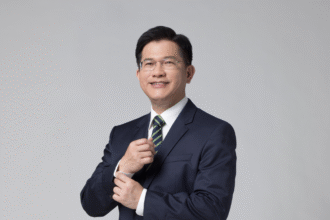
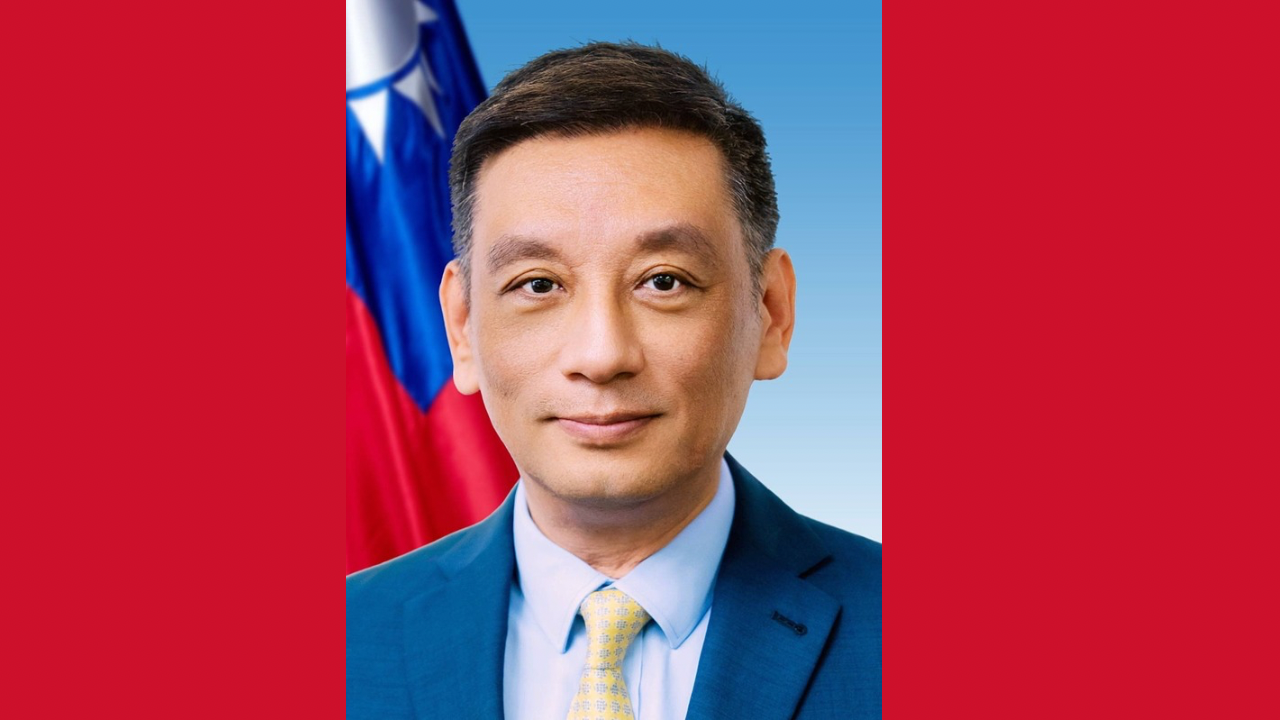


By H.E. Edward Ling-Wen Tao
Ambassador of the Republic of China (Taiwan) to Saint Kitts and Nevis


As the United Nations General Assembly meets under the theme “Restoring Trust, Managing Transformation: A United Nations that Delivers for All,” the pledge to “leave no one behind” remains unfulfilled while 23.5 million citizens of Taiwan remain excluded from the UN system. This injustice rests on a deliberate legal distortion that threatens Indo-Pacific stability and undermines global cooperation.
For decades, the People’s Republic of China (PRC) has misrepresented UNGA Resolution 2758 (XXVI) of 1971 as equivalent to its own “one China principle” to justify Taiwan’s exclusion. This interpretation has no legal foundation.
Resolution 2758 addressed only the representation of China within the UN. It does not mention Taiwan, does not declare Taiwan to be part of the PRC, and confers no mandate on the PRC to represent Taiwan’s 23.5 million people. As early as 1950, UN Secretary-General Trygve Lie affirmed that linking a state’s UN representation to government recognition is legally unsound. Only Taiwan’s democratically elected government can represent its people internationally. By twisting this resolution, Beijing seeks a legal pretext to alter the cross-strait status quo and threaten regional peace.

Peace in the Taiwan Strait is vital to global prosperity. Accountable for approximately 50 percent of global container shipping transits, this strategic waterway is a central artery for world trade. Conflict here would devastate international supply chains. The UN Charter obligates member states to resolve disputes peacefully and prevent threats to peace. The UN must uphold these principles and resist efforts that endanger cross-strait stability.
Despite its wrongful exclusion, Taiwan is determined to act as a force for good. Taiwan has pursued an integrated, value-added foreign policy centered on strengthening democratic alliances, promoting collective security, and building economic resilience. As a leader in semiconductors, artificial intelligence, and advanced manufacturing, Taiwan works alongside like-minded partners to defend democracy and human rights while building resilient technology supply chains free from dependence on authoritarian regimes. Taiwan’s proven strengths in disaster preparedness and public health further demonstrate its capacity to enrich global governance.
This spirit of shared prosperity is put into practice through Taiwan’s Diplomatic Allies Prosperity Project. By combining technical expertise with targeted resources, Taiwan collaborates with diplomatic partners on tailored, technology-driven solutions to local development challenges. In Saint Kitts and Nevis, concrete examples of this cooperation include the Basseterre Desalination Plant, the Bayford’s Layer Chicken Hatchery, the Solid Waste Recycling and Management Project, and the Pinney’s Beach Development.
Khalilur Rahman, President-elect of the upcoming 81st UN General Assembly, has highlighted restoring trust and managing institutional transformation as the core themes of his presidency. Taiwan fully embraces these principles and stands ready to help realize them. However, restoring confidence in the UN requires treating every member of the global community fairly. Transformation will remain incomplete as long as a constructive, trustworthy actor remains locked out.
As Ambassador to Saint Kitts and Nevis, I extend Taiwan’s heartfelt gratitude to the Government and people of the Federation for their unwavering support for Taiwan’s meaningful participation in the UN system and other international organizations.
Saint Kitts and Nevis exemplifies true global leadership by standing firm on principle, democracy, and justice. Our 43-year diplomatic partnership—rooted in mutual trust, education, capacity building, and sustainable development—demonstrates the tangible benefits of international cooperation.
The free world needs Taiwan—and a stronger, more credible United Nations needs Taiwan’s meaningful participation to build a more inclusive, secure, and rules-based international order. Ensuring Taiwan’s seat at the table is essential to realizing a UN that truly delivers for all.
Discover more from SKN PULSE
Subscribe to get the latest posts sent to your email.