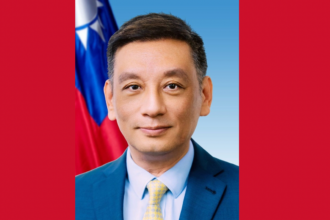



By H.E. Edward Ling-wen Tao
Ambassador of the Republic of China (Taiwan) to St. Kitts and Nevis

November 2026

A Shared Island Reality in a Changing Climate
Small island nations across the world face immense challenges due to climate change. Unpredictable rainfall, extended dry spells, and intensified tropical storms are no longer distant forecasts—they are daily realities affecting our families, local agriculture, and coastal infrastructure. Although located thousands of miles apart, Taiwan and the twin-island Federation of St. Kitts and Nevis confront these same growing ecological risks. Because of this shared vulnerability, localized climate action has never been more urgent. Real resilience demands moving beyond high-level global pledges toward immediate, impactful efforts on the ground.
It is within the context of this common challenge that the partnership between Taiwan and the Federation finds its true strength. Although Taiwan is an island economy outside the formal machinery of the United Nations Framework Convention on Climate Change (UNFCCC), we operate firmly in the spirit of the Paris Agreement. Rather than waiting for international consensus, Taiwan has spent 2026 turning its 2035 Nationally Determined Contributions (NDCs) into action—deploying targeted national policies across energy, waste management, and sustainable infrastructure that parallel the Sustainable Island State Agenda (SISA) championed by Prime Minister Dr. Terrance Drew.
Driving Decarbonization and Green Innovation
In alignment with Articles 4 and 13 of the Paris Agreement, Taiwan formally approved its Third-Phase Greenhouse Gas Reduction Action Programs (2026–2030) this year, establishing clear annual reduction milestones across energy, manufacturing, buildings, transportation, agriculture, and the environment. Taiwan’s latest national inventory confirms that net greenhouse gas emissions have dropped for a third consecutive year—falling 6.59 percent below 2005 levels—while carbon dioxide emission density decreased by 48.59 percent. This progress demonstrates that economic development can successfully decouple from carbon emissions through disciplined governance.
To accelerate industrial decarbonization, Taiwan officially launched its carbon fee collection system this year, generating US$158 million in its inaugural year for its dedicated Greenhouse Gas Management Fund. Recognized by the United Kingdom as a qualifying scheme under its Carbon Border Adjustment Mechanism (CBAM), Taiwan is also rolling out the cap-and-trade Taiwan Emissions Trading System (TW-ETS) alongside circular economy legislation that generates over US$31.7 billion in annual revenue.

Tangible Bilateral Cooperation on the Ground
Taiwan’s climate diplomacy is grounded in the core belief that international cooperation must yield practical benefits for local communities. Here in the Federation, Taiwan is proud to partner with the Government of St. Kitts and Nevis on high-impact projects that build long-term resilience:
• Water Security & Climate Adaptation: To combat severe climate-induced droughts, TaiwanICDF collaborated with local authorities on the landmark Basseterre Desalination Plant. Using advanced seawater Reverse Osmosis (SWRO) technology, this facility will provide reliable freshwater supply to households and local businesses for many years to come.
• Solid Waste Management & Circular Economy: Through our joint Solid Waste Management and Recycling Project with the Ministry of Sustainable Development and Environment, we are building modern recycling systems across the islands. Recyclable plastics collected locally are processed, exported and integrated into global circular supply chains—diverting tons of waste from landfills while transforming local environmental management.
• Green Energy Transformation: In support of the Federation’s goal to transition to clean energy, Taiwan continues to provide technical assistance and capacity building for solar energy development and smart grid modernization, enhancing energy independence and reducing reliance on imported fossil fuels.
A Shared Vision for a Sustainable Future
The Government and people of the Republic of China (Taiwan) are deeply grateful for the unwavering support of the Government and people of St. Kitts and Nevis towards Taiwan’s meaningful participation in the UNFCCC and other global environmental initiatives.
Global climate governance cannot afford dangerous blind spots. As a major economy and a key hub in global supply chains, Taiwan’s exclusion from the UNFCCC undermines collective progress. By fully integrating Taiwan’s expertise, resources, and actionable green transition strategies into global climate frameworks, the international community stands to gain an indispensable partner.
As leaders gather for COP31, I would like to extend my warmest wishes to the delegation of St. Kitts and Nevis for a highly fruitful meeting with their international partners. May the Federation proudly showcase its remarkable achievements as a Sustainable Island State on the global stage, proving that small islands can lead with immense impact. Taiwan stands ready to continue walking hand in hand with St. Kitts and Nevis, transforming shared climate risks into shared opportunities for a resilient, net-zero future.

Discover more from SKN PULSE
Subscribe to get the latest posts sent to your email.