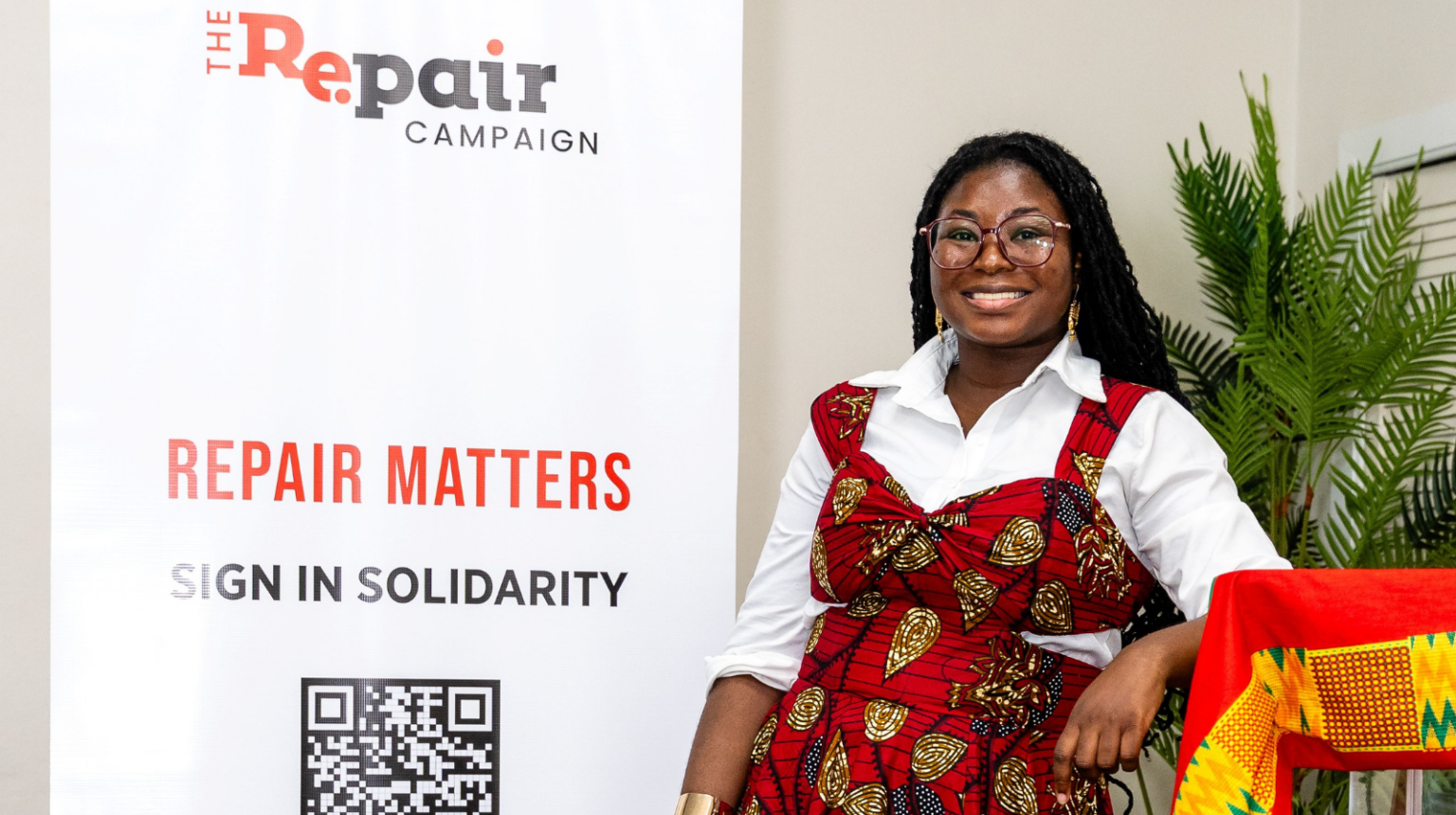


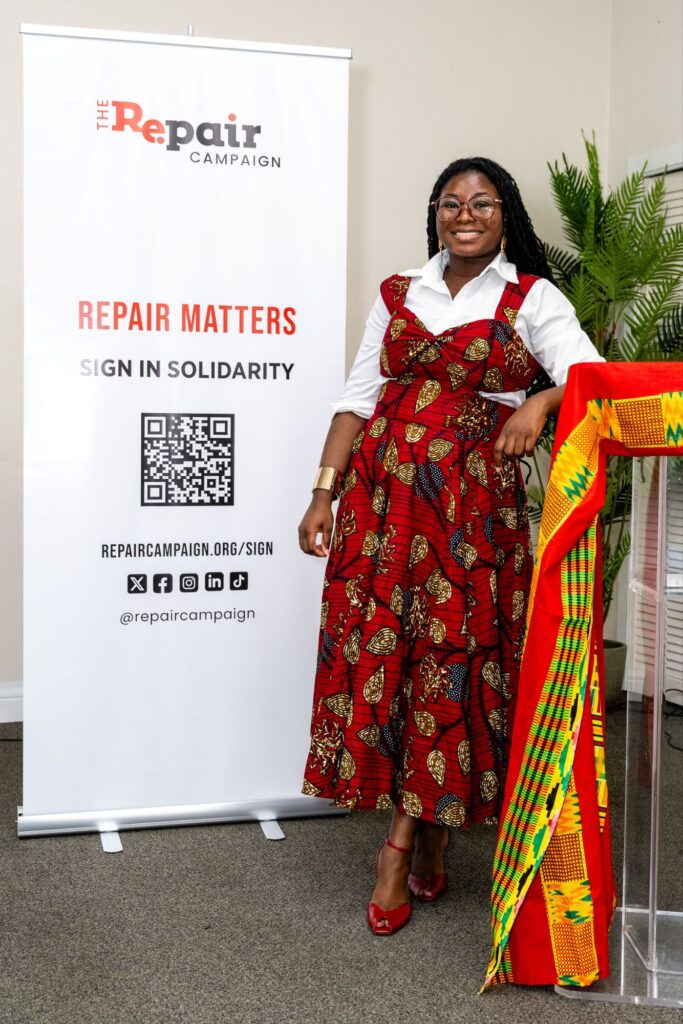
St. Kitts and Nevis – 13 February 2026: “I don’t think people simply do not care about reparations; they haven’t been given enough information to truly understand how reparations can positively impact their lives.” This is the belief shaped by more than a decade of grassroots advocacy by Elsie Harry.
Elsie’s formative years were spent in the Federation of St. Kitts and Nevis since migrating from Guyana at age 6. As a teen, she served as a youth parliamentarian and has since advocated on issues affecting livelihoods, rooting her advocacy in nation-building. Now an Urban and Rural Planner, STEM Advocate, and a long-standing voice for youth and reparations in both St. Kitts and Nevis and Guyana, Elsie is driven by a simple conviction: that people cannot be expected to engage fully with what they have never been given the tools to understand. That conviction now guides her work as a Community Organiser with The Repair Campaign in St. Kitts and Nevis, where her focus is on making reparations understandable and connected to everyday realities.


The Youngest Person in the Room
Elsie was invited to her first reparations meeting after returning to Guyana as an undergraduate student. Amidst a table of persons aged 50 to 70 years old, she recalled being told, “You’re the young person in the room, so you have to recruit young people for the movement” and she adopted it as a mandate.
She quickly realised, however, that many young people were overwhelmed by their own challenges – unemployment, access to education, living expenses, and day-to-day survival. “Naturally, bread and butter issues had to come first. Reparations couldn’t take priority over getting a job and paying your bills.”
Rather than stepping away from the work, Elsie adjusted her approach, coupling conversations on reparations with mentorship, career guidance, and practical support. With her new approach, “young people now had the mental space” to understand how reparations connected directly to the conditions they were navigating. “We can’t leave it to chance that young people will come into this work on their own; if the movement is going to last, it has to intentionally make space for them,” she noted.
Making reparations understandable
For Elsie, grounding the conversation remains critical. “I embraced my African identity from a young age, largely because of my father,” she shared. He encouraged her to read the works of thought leaders like Walter Rodney and to understand how Africa and the Caribbean were deliberately underdeveloped. “By the time I was invited into the reparations conversation,” she reflected, “I was already fertile soil.”
This knowledge is not something most people are exposed to growing up in the Caribbean, a reality that now shapes her organising work with The Repair Campaign. Elsie focuses on creating entry points for new people through conversation, education, and shared learning, to help build a reparations movement that is informed, inclusive, and sustainable in St. Kitts and Nevis.
Reading the landscape in St. Kitts and Nevis
“As an Urban and Rural Planner, I observe how land is used, and you can see how colonialism shaped every aspect of our society,” shared Elsie. In St. Kitts and Nevis, those legacies are visible in the land itself, where for centuries sugar cultivation shaped land use to serve colonial extraction rather than local needs. “When the sugar industry closed in 2005, it felt like our society was scrambling to deal with this major shift in the country’s developmental trajectory.”
“None of this”, Elsie reflected, “was chosen by the people most affected by it; this was inherited from colonialism. Reparations is about responding to these inherited systems that are still shaping our lives.”
Building a Collective
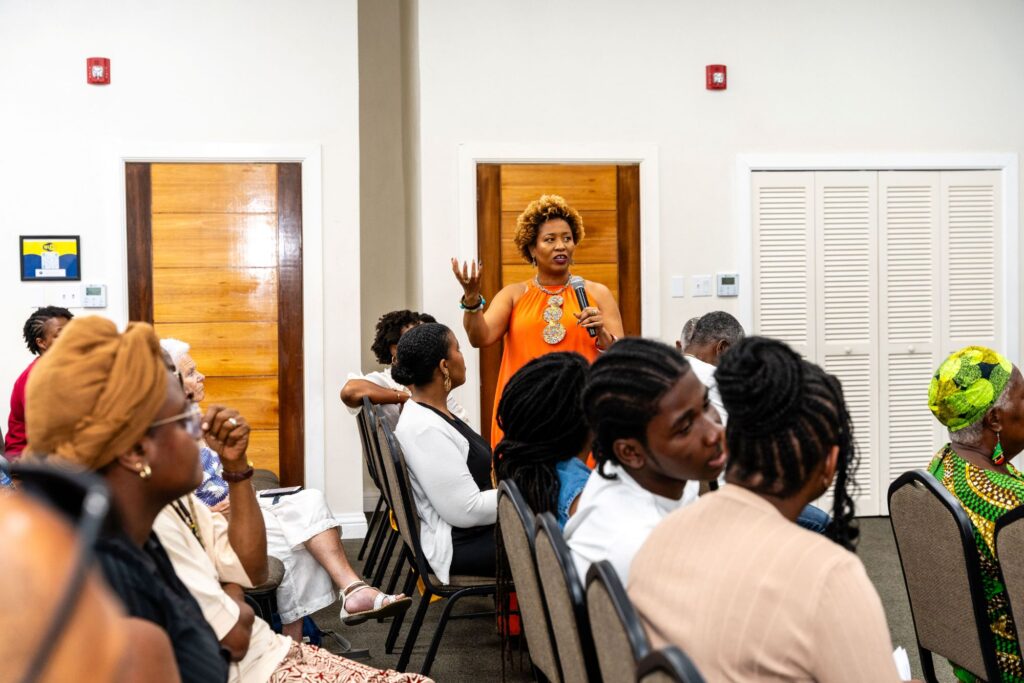
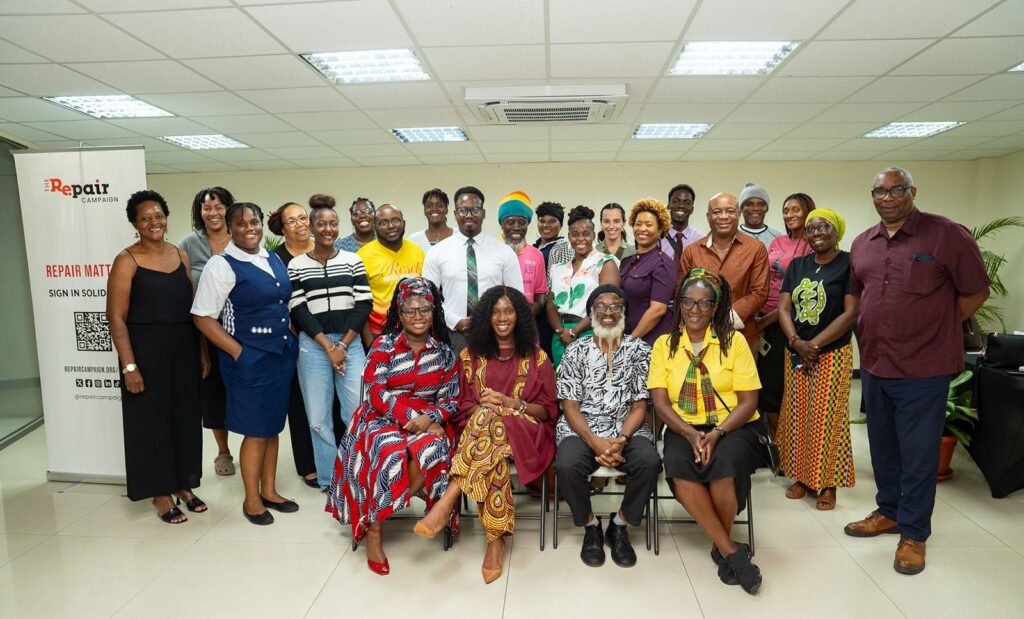
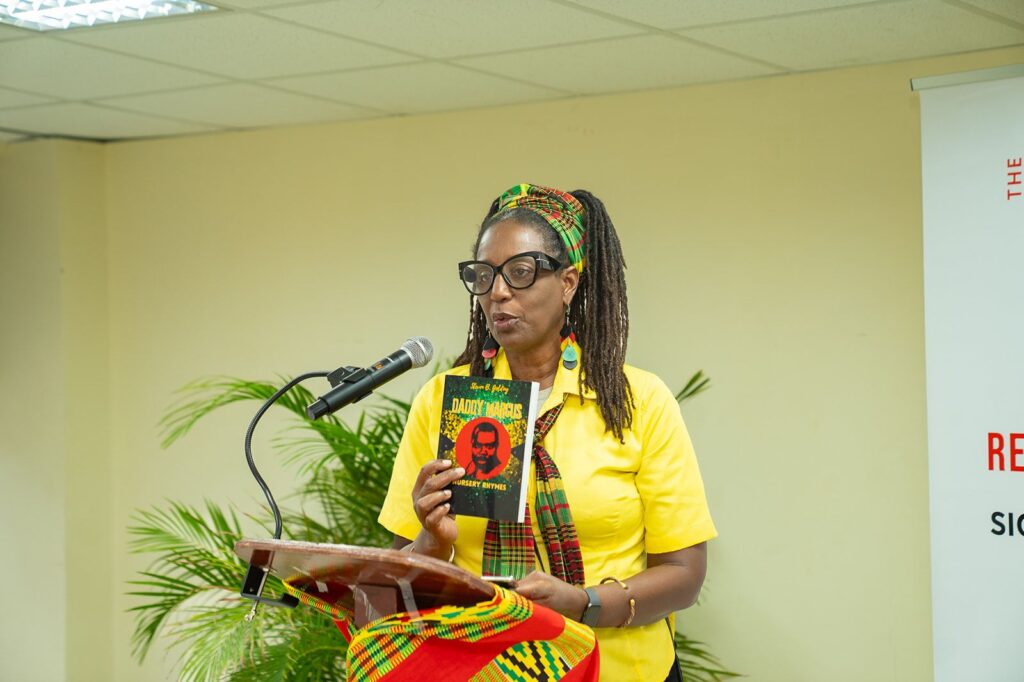
For weeks Elsie engaged with reparations stakeholders, including Chairperson of the National Reparations Committee, Carla Astaphan, and community members as part of her work with The Repair Campaign. She brought that work into the open through her first two events — one in St. Kitts on February 7 and another in Nevis on February 10. “The aim of these events was simply to have a conversation on reparations,” Elsie noted. “I wanted people to understand what reparations is, what work has already been done, and how they can participate as individuals.”
Those conversations, she is clear, are only the beginning. “Reparations is not work that should only be done by people who have made a career out of reparations, it is work that is tied to our identities as a people. Therefore, it is everyone’s responsibility,” Elsie said.
Her focus now is on continuing the work of education, advocacy, and relationship-building to strengthen a broad base of people who are informed, organised, and ready to support political action on reparations. For Elsie, that is how a movement lasts: “Engaging people and building movement infrastructure. That’s the work.”
-ENDS-
Contact: Sheba Gifford, The Repair Campaign, Tel: 876-879-5763, Email:shebagifford@repaircampaign.org
Discover more from SKN PULSE
Subscribe to get the latest posts sent to your email.