

Justice in Action: How Community Organisers Are Connecting Historical Legacies to Lived Realities Across the Caribbean
On March 25, the United Nations commemorates the International Day of Remembrance of the Victims of Slavery and the Transatlantic Slave Trade, a moment to honour those who suffered, resisted, and endured, while reckoning with the lasting harms of the enslavement of African people and colonialism. This year’s theme, “Justice in Action: Confronting History, Advancing Dignity, Empowering Futures,” speaks directly to the Caribbean’s ongoing pursuit of reparatory justice, as communities across the region turn remembrance into action.

Across Guyana, Saint Lucia, Trinidad and Tobago, and Saint Kitts and Nevis, four Community Organisers – Kibwe, Sherween, Lovell, and Elsie – are bringing the call for reparations closer to home through their work with The Repair Campaign. By creating spaces for conversation, reflection, and learning, they are helping people connect the history of the enslavement of African people and colonialism to the realities their communities face today, making reparatory justice more personal, more relatable, and more rooted in the everyday pursuit of justice across the region.
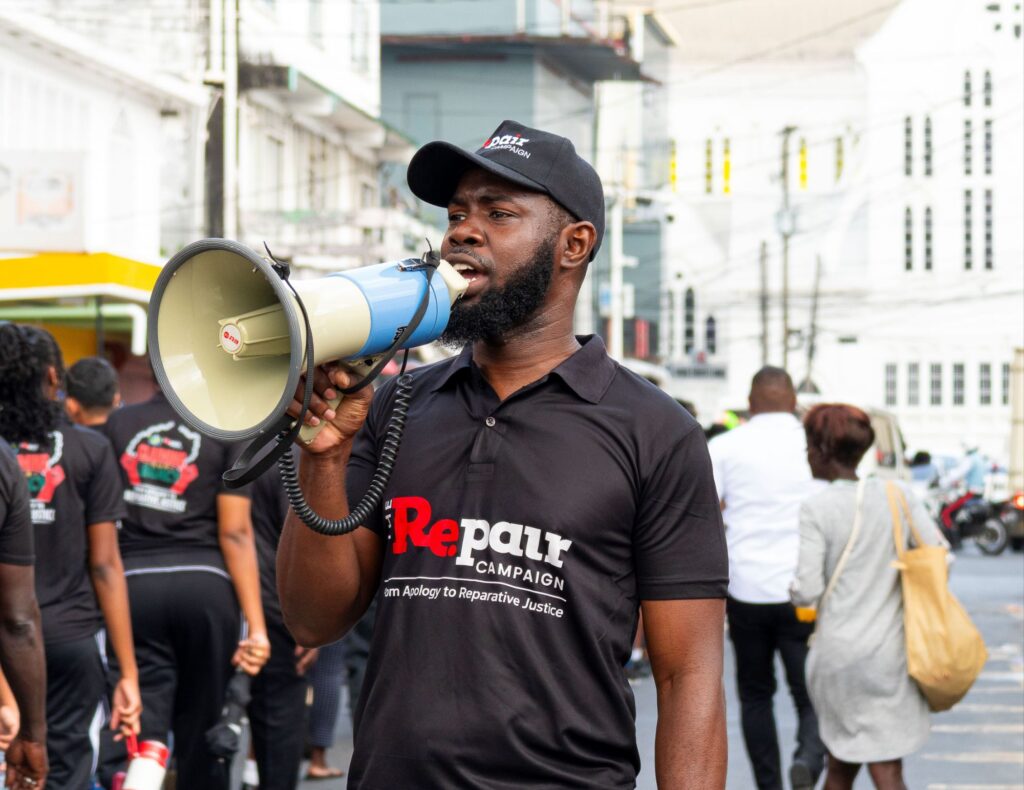
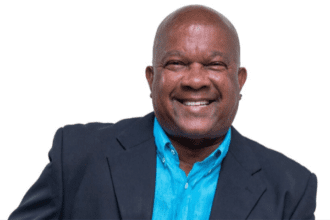
Kibwe Copeland (Guyana): As an African man, this work is my lifeline to the ancestors whose struggles for freedom inform my identity. Understanding the mechanisms of our enslavement reveals exactly why people of African descent face today’s systemic disparities. This isn’t just history; it is a roadmap for our liberation. In Guyana, I am building a structured grassroots movement that bridges clergy, youth, and academics. Through relational organising and one-on-one coaching, we are turning potential into leadership. From the rhythmic resonance of our “Echo of the Drum” event to our 300-strong Black History Month march, we are meeting people where they are, using art and culture to translate complex justice into a common language.
The impact is visible, the dialogue is shifting from passive curiosity to active mobilisation. Our movement is growing as we now pivot toward direct political engagement with Members of Parliament. Reparatory justice is vital for Guyana’s future. Despite our status as the world’s fastest-growing economy, the playing field remains unbalanced regarding land, finance, and employment for Afro-Guyanese. We demand a formal apology and a Parliamentary resolution to address these lingering stains, ensuring our history is taught and our dignity is finally made whole.
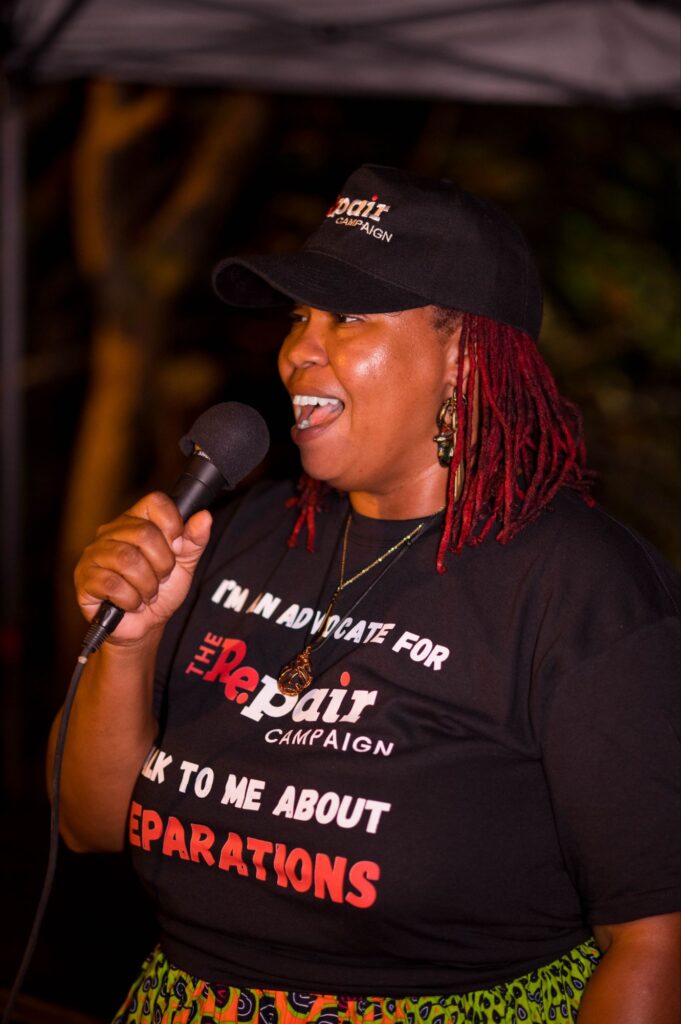

Sherween Gonzales (Saint Lucia): For me, the work of reparatory justice is deeply personal. As a Saint Lucian mother and community organiser, I have come to understand that the legacy of the transatlantic slave trade is not something confined to the past. It continues to shape many of the challenges our societies face today. Across the Caribbean we are seeing some of the highest rates of non-communicable diseases such as diabetes and hypertension, which is why the CARICOM 10-Point Plan for Reparatory Justice calls for serious investment in public health as part of repairing the damage caused by centuries of exploitation and displacement.
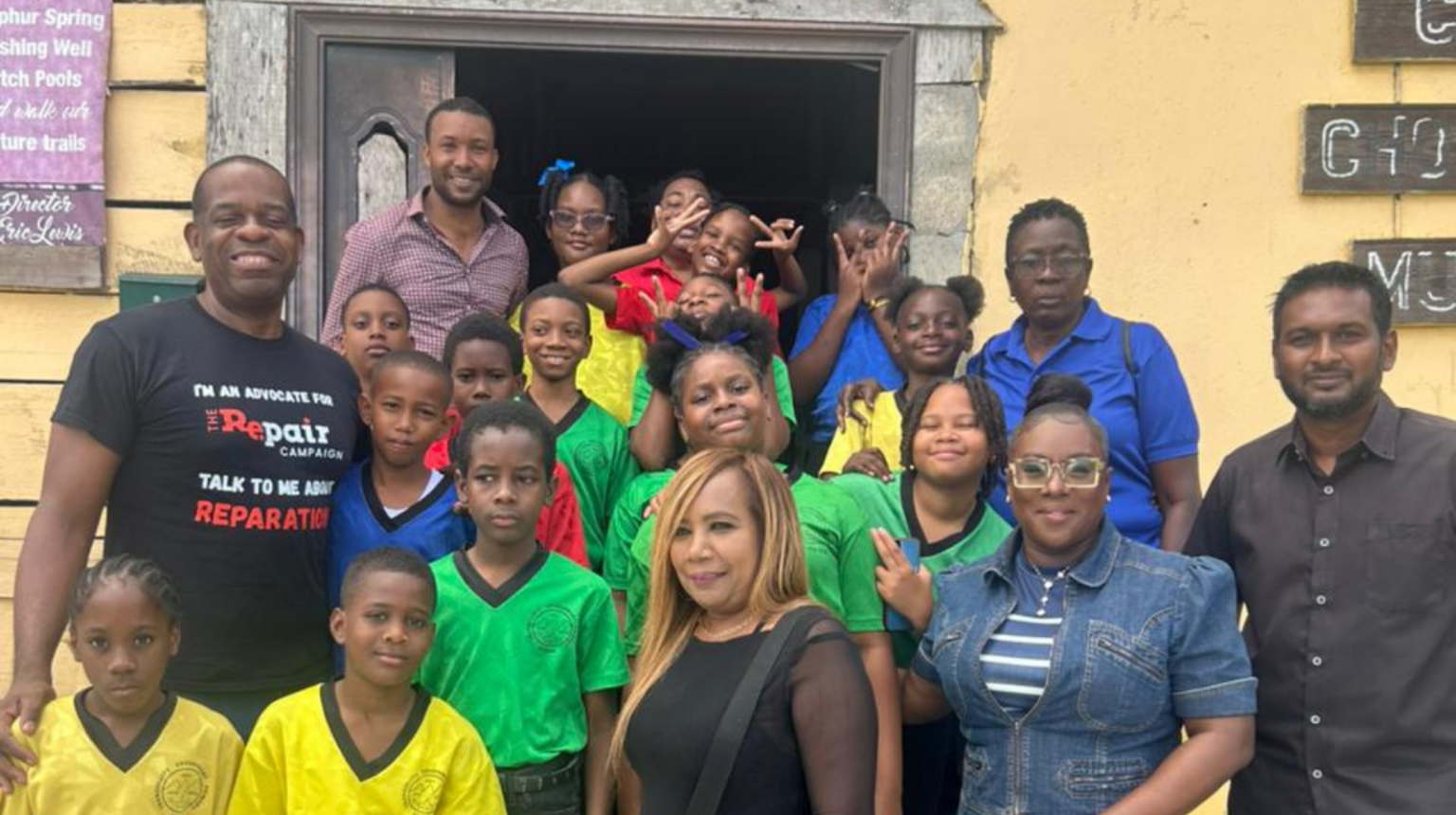
Through my work with The Repair Campaign in Saint Lucia, I have been organising community conversations across the island, building a core team, meeting with government officials, and creating spaces where people can learn about reparations and what justice could look like for our communities. Our recent gathering in Choiseul brought together community members to reason about our history and the future we want to build. What I am seeing is that once the conversation begins, people are ready to engage. I believe reparatory justice is about dignity, truth, and ensuring that Saint Lucia and the Caribbean can move forward with greater justice and opportunity for future generations.”
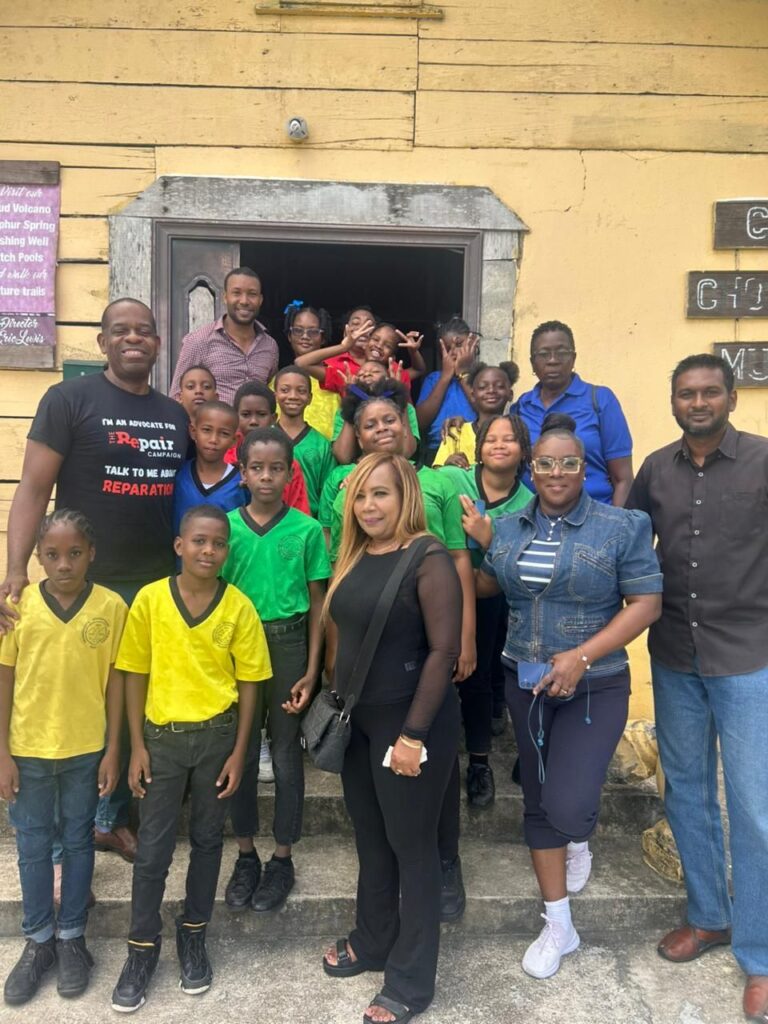
Lovell Francis (Trinidad & Tobago): On March 25th we will be commemorating the International Day of Remembrance for the Victims of the Transatlantic Slave Trade. The diction used herein is precisely chosen: we remember with reverence the millions seized from their homes to serve as collateral damage for Western European wealth creation, and we do so honouring those who died on that perilous journey and those who survived. As an individual, who as part of The Repair Campaign is intimately involved in the struggle for Reparations, March 25th serves as a poignant illustration of why it matters so much to Caribbean people. It is a reminder that we have been handed a legacy which mandates that we the descended must carry on the work needed to right this greatest of historical wrongs, no matter the cost in time or effort. The work continues, and for the ancestors, we can do no less.
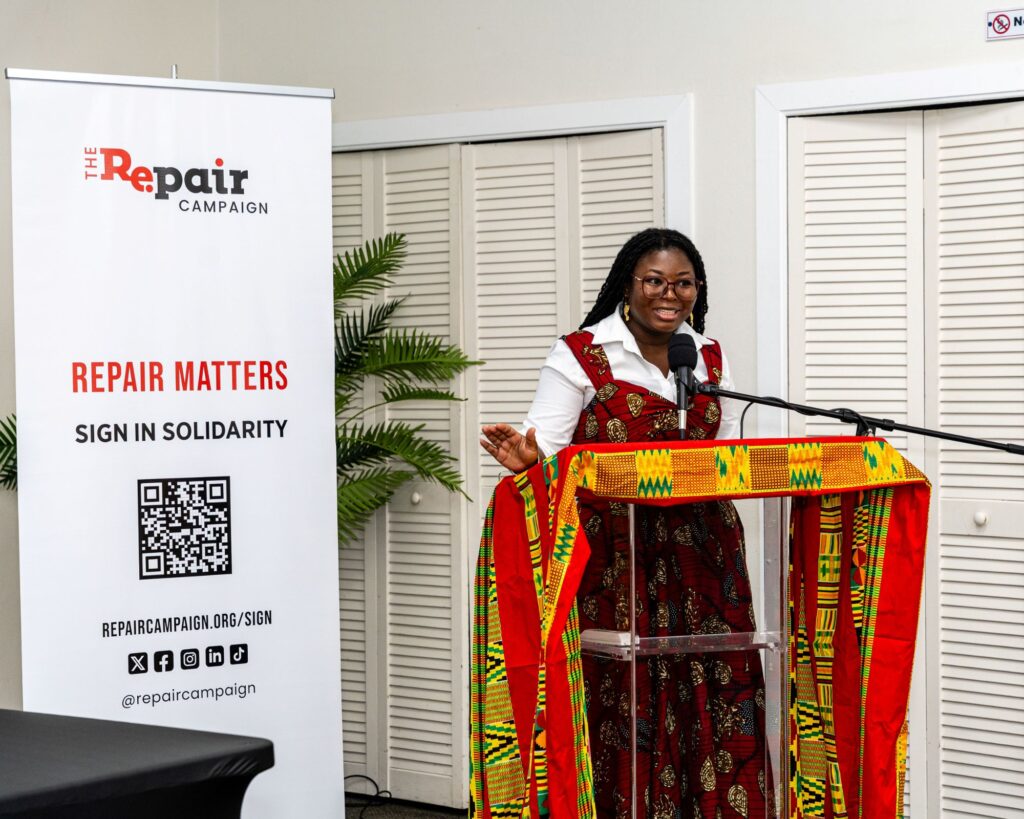
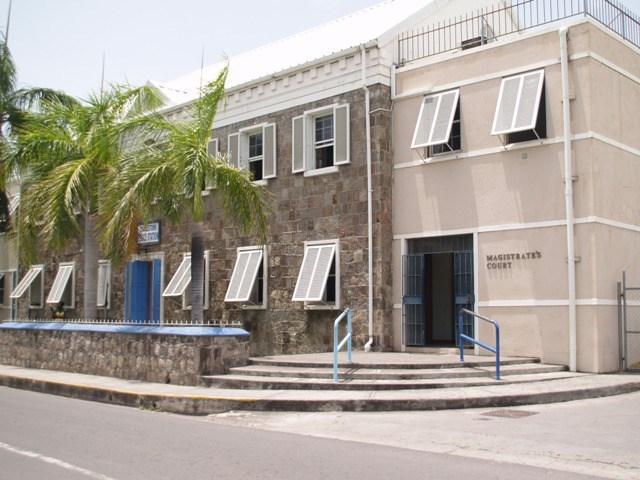
Elsie Harry (St. Kitts & Nevis): Through my lens as an Urban and Rural Planner and Community Development Specialist, I see how the legacy of colonialism and enslavement is not confined to history; it is embedded in how our communities are structured today. It is visible in patterns of land distribution, infrastructure gaps, and the uneven development trajectories across communities. My work as a Community Organiser, has allowed me to facilitate consultations across St. Kitts and Nevis that create space for persons to critically examine how historical injustice continues to shape their lives.
What has been most striking, is how quickly these conversations resonate. People are making the connections for themselves—between past colonial extraction and present-day limitations. In one consultation, a participant pointed out, that while we have preserved many colonial structures, there are very few monuments built to commemorate our African ancestors who resisted enslavement. That observation reflects a deeper truth about whose histories we centre and how we choose to remember. This work is already shifting perspectives, building awareness, and strengthening community voice. Reparatory justice is essential for our future because it is a development imperative that focuses on restructuring systems, investing in people, and creating a more equitable foundation for future generations.
-ENDS-